Hidden Gems in Istanbul: 10 Quieter Places Most Visitors Miss
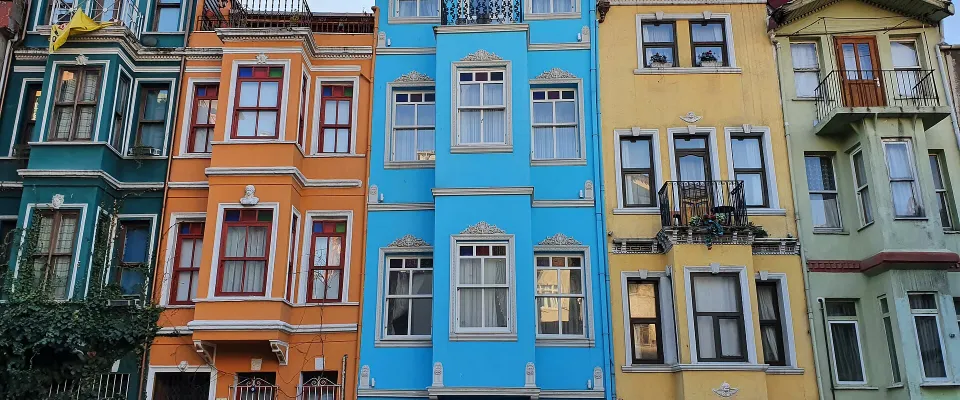
Most first visits to Istanbul stay between Hagia Sophia, the Blue Mosque and the Grand Bazaar. A short walk, tram or ferry ride away are tiled mosques, Byzantine cisterns and old neighbourhoods that feel far calmer.
With half a day near Sultanahmet, combine Little Hagia Sophia, the Sokollu Mehmed Pasha Mosque and the Theodosius Cistern. With a full day, walk through Balat and Fener, then take the cable car up to Pierre Loti Hill. On the Asian side, Kuzguncuk and Moda are an easy ferry ride away.
In the Old City
1. Rüstem Pasha Mosque
A small mosque by the architect Mimar Sinan, raised above the shops near the Spice Bazaar in Eminönü. Its walls are covered in Iznik tiles with tulips, carnations and geometric patterns, and many people consider it the most beautifully tiled mosque in the city. It reopened for worship in 2020 after a four-year restoration.
Getting there: walk from the Eminönü tram stop. The entrance is at the top of a flight of stairs from the busy market street, which is why many people walk past without noticing it.
2. Little Hagia Sophia (Küçük Ayasofya)
Built in the 6th century as the Church of Saints Sergius and Bacchus and later converted into a mosque, it is one of the oldest Byzantine buildings in Istanbul. Its shady courtyard is usually calm, even when Sultanahmet Square is packed.
Getting there: about a 10-minute walk downhill from Sultanahmet Square, towards the sea.
3. Sokollu Mehmed Pasha Mosque
Another Sinan mosque, completed in 1571–72 on a steep slope in the Kadırga neighbourhood. Inside are some of the finest Iznik tiles in Istanbul, and small fragments said to come from the Black Stone of the Kaaba in Mecca are set above the entrance, in the pulpit and in the mihrab.
Getting there: a few minutes’ walk uphill from Little Hagia Sophia.
4. Theodosius Cistern (Şerefiye Sarnıcı)
A Byzantine water cistern from the 5th century, restored and opened as a cultural venue with a light show among its marble columns. It is much smaller than the famous Basilica Cistern, and usually far less crowded.
Getting there: a short walk from the Çemberlitaş tram stop. There is an entrance fee.
Along the Golden Horn
5. Balat and Fener
Steep lanes of colourful houses, small antique shops and cafés along the Golden Horn. On the shore stands the Bulgarian St Stephen Church: its iron parts were made in Vienna, shipped to Istanbul and assembled here, and it was consecrated in 1898.
Tip: weekday mornings are the calmest time. People live in these houses, so keep doorways and steps clear when you take photos.
6. Pierre Loti Hill
A hilltop café terrace above Eyüp with a long view down the Golden Horn towards the Old City. Go in the last hour before sunset.
Getting there: take the TF2 cable car from Eyüp, near the Eyüp Sultan Mosque, or walk up through the old hillside cemetery. You can pay for the cable car with an Istanbulkart.
On the Asian side
7. Kuzguncuk
A small, village-like neighbourhood on the Bosphorus north of Üsküdar, with wooden houses, a mosque and an Armenian church standing next to each other, a synagogue and small cafés on İcadiye Street.
Getting there: take a ferry to Üsküdar, then a short bus or taxi ride north along the shore, or walk for about 30 minutes.
8. Moda
A seaside neighbourhood in Kadıköy with a long shoreline park, where locals sit on the rocks and benches at sunset. Pair it with the food shops and market streets near the Kadıköy pier.
Getting there: take a ferry to Kadıköy, then walk for about 15 to 20 minutes.
On the Bosphorus and the islands
9. Emirgan Grove (Emirgan Korusu)
A large park with old trees and restored Ottoman pavilions on the European shore of the Bosphorus. In April it is planted with tulips for the city’s tulip festival, and it makes a pleasant green break at any time of year.
Getting there: buses run along the Bosphorus shore road from Kabataş and Beşiktaş.
10. Heybeliada and Burgazada
Two of the car-free Princes’ Islands, quieter than the largest island, Büyükada. Expect pine woods, wooden mansions and small coves.
Getting there: city ferries (Şehir Hatları) leave from Kabataş, call at Kadıköy and then stop at the islands one by one. You can pay with an Istanbulkart. Check the time of the last ferry back, as there are fewer sailings in winter.
Tips for visiting
- Mosques: cover your shoulders and knees, women should cover their hair, and take off your shoes at the entrance. Avoid prayer times, especially Friday midday. Our Hagia Sophia guide explains the dress code.
- Transport: one Istanbulkart works on trams, ferries, buses and the Pierre Loti cable car. See getting around Istanbul.
- Shoes: Balat, Fener and Kuzguncuk are hilly and cobbled.
- Hours and prices: opening hours and ticket prices change, so check them before you set out.
Official and primary sources
- Metro Istanbul: TF2 Eyüp–Piyer Loti cable car (official)
- Şehir Hatları: Istanbul city ferries and timetables (official)
- General Directorate of Foundations: Rüstem Pasha Mosque reopened after restoration (official)
- Other place descriptions agree across several travel guides and news reports reviewed in November 2026.
Details in this guide were checked on 26 November 2026. Fares, fees and schedules change, so treat any price as a guide and confirm it at the source before you pay.